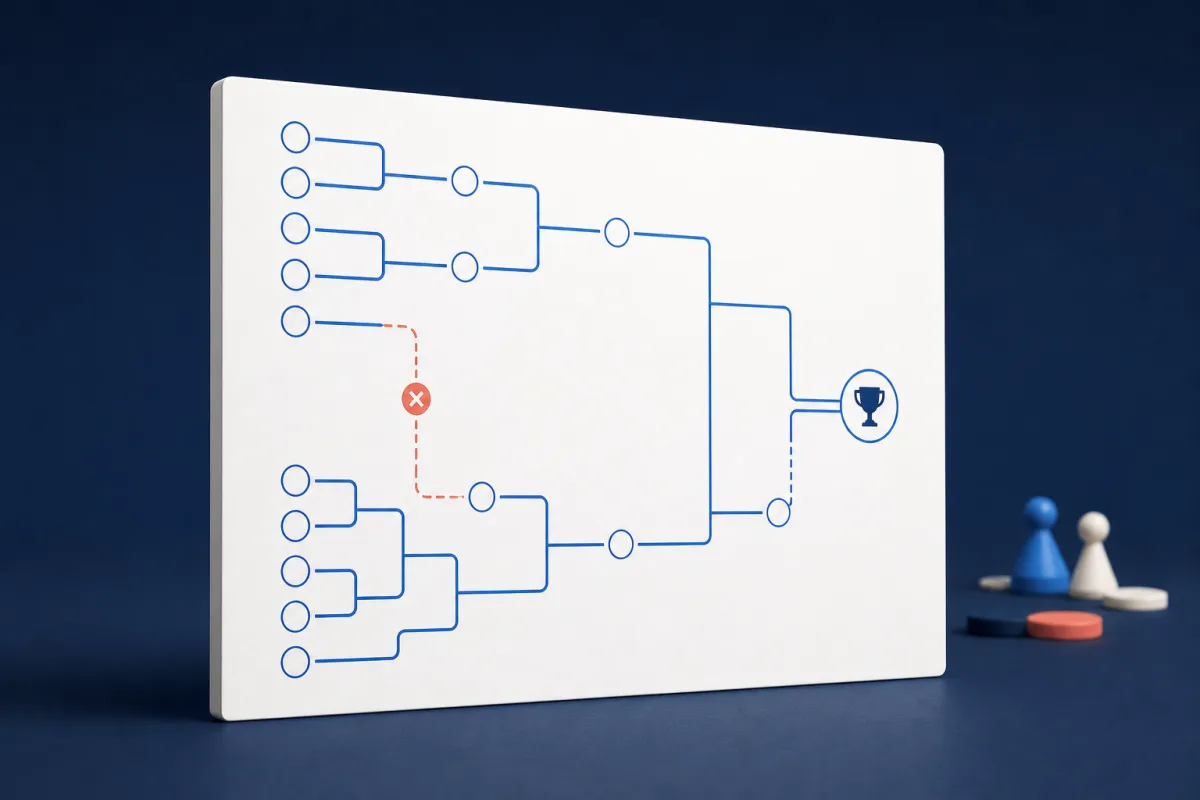
A double-elimination bracket lets a team continue after one loss; its second loss ends its tournament. It is a practical format when you want an early upset to matter without making it a team’s final opportunity. Source (accessed 2026-10-23)
The format can look busy on paper, but the core idea is simple: winners keep advancing through one path, while teams with one loss play through another. Start with the explanation below, then choose a bracket layout that fits your field and event rules.
How a double-elimination bracket works
After the opening round, winning teams advance in the winners’ bracket and losing teams enter the losers’ bracket. A loss in the winners’ bracket is not elimination; a later loss in the losers’ bracket is. Source (accessed 2026-10-23)
- Winners’ bracket: the route for teams that have not lost.
- Losers’ bracket: the route for teams carrying one loss.
- Elimination: a team leaves the event when it receives its second loss.
Imagine Harbor loses its opening match to Pine. Harbor does not disappear from the bracket: it drops into a designated losers’ bracket game. If Harbor wins there, it stays alive. If it loses that game, it has two losses and is out. Pine remains in the winners’ bracket until it loses for the first time.
This structure rewards consistent performance while still giving organizers and players a way to recover from one difficult matchup. It also means the losers’ side should be treated as a live route to the title, not as a consolation list.
From the opening round to the final
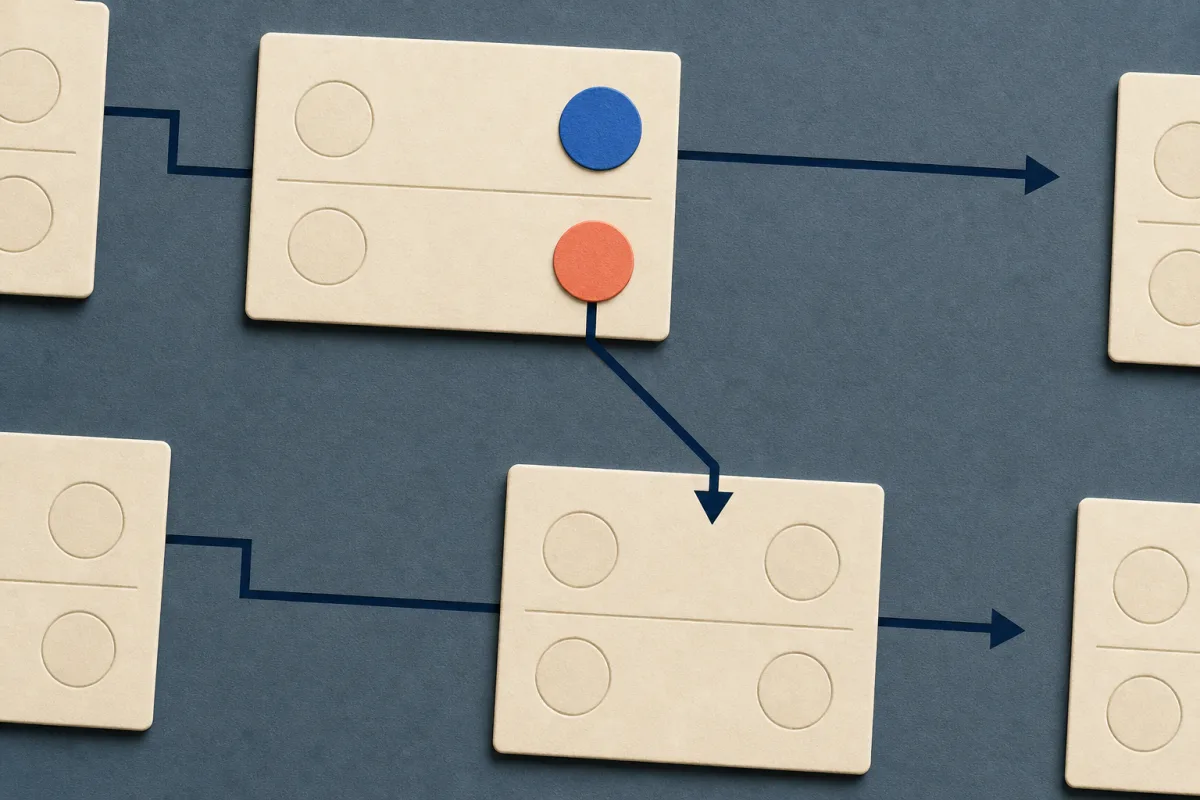
Read the bracket in stages rather than trying to follow every connector at once. First, record the winners’ bracket results. Next, move each losing team to the labeled losers’ bracket position. Then continue recording winners there, removing a team only after its second loss.
- Seed teams and place them in the opening winners’ bracket games.
- Advance each match winner in the winners’ bracket.
- Move each match loser into its assigned losers’ bracket game.
- Continue the losers’ bracket until one team remains.
- Play the winners’ bracket finalist against the losers’ bracket finalist under the event’s published championship rules.
Before play begins, share the completed bracket and explain who is responsible for entering scores. A shared digital bracket reduces ambiguity when teams move between paths; a printed bracket can work well when a visible event board is easier for everyone to check.
For an editable starting point, open the free tournament bracket generator. If you are comparing workflows before committing to one, see what to compare in a free bracket builder.
What a championship reset means
The winners’ bracket finalist arrives without a loss, while the surviving losers’ bracket finalist has already lost once. In a reset-style championship, if the one-loss finalist wins the first title match, both finalists then have one loss and a further match decides the champion. Double-elimination finals can be organized differently under local regulations, so the reset rule should be stated before the tournament starts. Source (accessed 2026-10-23)
Do not assume a final is automatically one match or automatically a reset. Put the exact final rule in the event notes, along with tie-breaking, check-in, forfeit, and score-reporting rules. That small step prevents the most common bracket-room disagreement: whether an undefeated finalist can be eliminated by one loss.
Choosing a bracket size and handling byes
Choose a bracket built for your actual number of teams rather than forcing a smaller field into a larger blank layout. Fields that do not fill a standard bracket capacity usually need byes: marked advances in the opening round where no opponent is assigned. Place byes deliberately, typically in accordance with the seeding policy you publish for the event.
Common field sizes
- Four teams: useful for a short local event, where the full winners’ and losers’ paths remain easy to display.
- Five, six, or seven teams: use a layout designed for that field and make the opening-round byes visible before play begins.
- Eight teams: a clean starting size for a balanced opening winners’ round.
- Ten teams: choose a dedicated layout rather than editing an eight-team sheet by hand; verify every loser destination before sharing it.
Seeding and byes are policy choices, not decoration. State whether seeds come from prior results, a draw, rankings, or another method. Then check the first round for avoidable rematches, missing teams, and paths that do not have a clear loser destination.
Scheduling and scorekeeping
Double elimination generally requires more matches than single elimination because teams can remain active after an initial loss. The exact total and the pace of play depend on field size, byes, and the championship rule. Source (accessed 2026-10-23)
Build a schedule around dependencies, not just empty time slots. A team that loses late in the winners’ bracket may need a short turnaround before its next losers’ bracket game, while another team may wait for a result elsewhere. Leave room for reporting scores, moving teams accurately, and a possible championship reset.
- Use one consistent team name in every round.
- Record the winner and score immediately after each match.
- Confirm the losing team’s next destination before announcing the next game.
- Keep the bracket viewable to participants and update it from a single source of truth.
- Reserve time and venue capacity for the final rule you announced.
Printable versus editable brackets
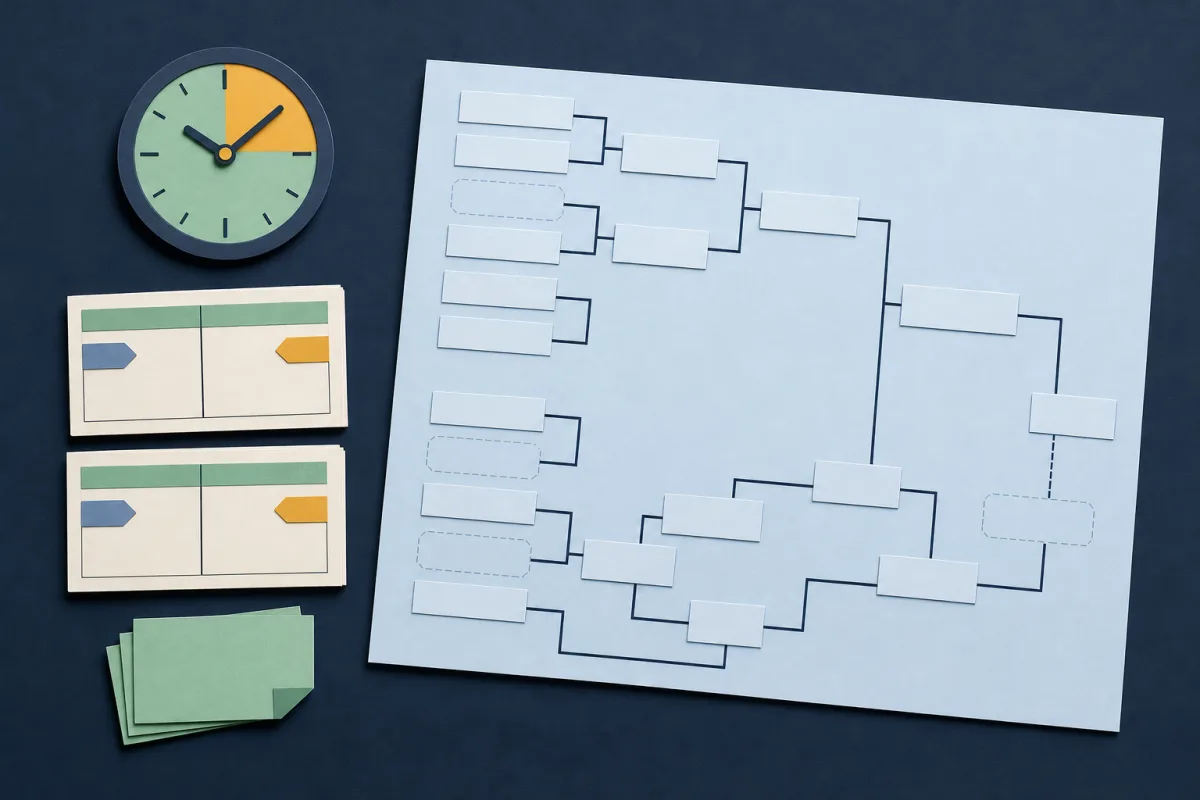
A printable bracket suits an in-person board, a paper check-in table, or a small event with a designated scorekeeper. An editable bracket suits organizers who need to correct names, share updates, or keep a live record as results arrive. Printable bracket services may offer both printing and title customization, but confirm the format and rules match your event before using any template. Source (accessed 2026-10-23)
For a digital event setup, begin with Brakora’s tournament bracket maker, then save or share the bracket according to your event’s workflow. If your event is better served by every team meeting every other team, compare the format with a round-robin tournament schedule planner instead.
Double elimination compared with single elimination
Single elimination removes a team after one defeat. Double elimination gives that team a losers’ bracket route after its first defeat, then removes it after the second. Source (accessed 2026-10-23)
Choose single elimination when the schedule is tight and a short, direct event matters most. Choose double elimination when you have more time, want teams to play beyond one loss, and can manage the added movement between bracket paths. Neither format is automatically better; the right choice depends on available courts or stations, staff, participant expectations, and the final rule.
Frequently asked questions
Can a team that loses once still win?
Yes. A first loss sends a team into the losers’ bracket. It can still reach the championship by winning its remaining matches. Source (accessed 2026-10-23)
Is a reset final always required?
No. A reset is common in formats that preserve the undefeated finalist’s advantage, but event regulations can define the championship differently. Publish the rule before the event. Source (accessed 2026-10-23)
What should I do with a nonstandard number of teams?
Use a bracket designed for that field, assign byes according to a stated seeding policy, and trace every first-round loser to the correct losers’ bracket game before play starts.
Where can I find more tournament planning resources?
Browse the Brakora guides for additional bracket and format planning topics.
See also: 10-Team Single-Elimination Bracket Setup