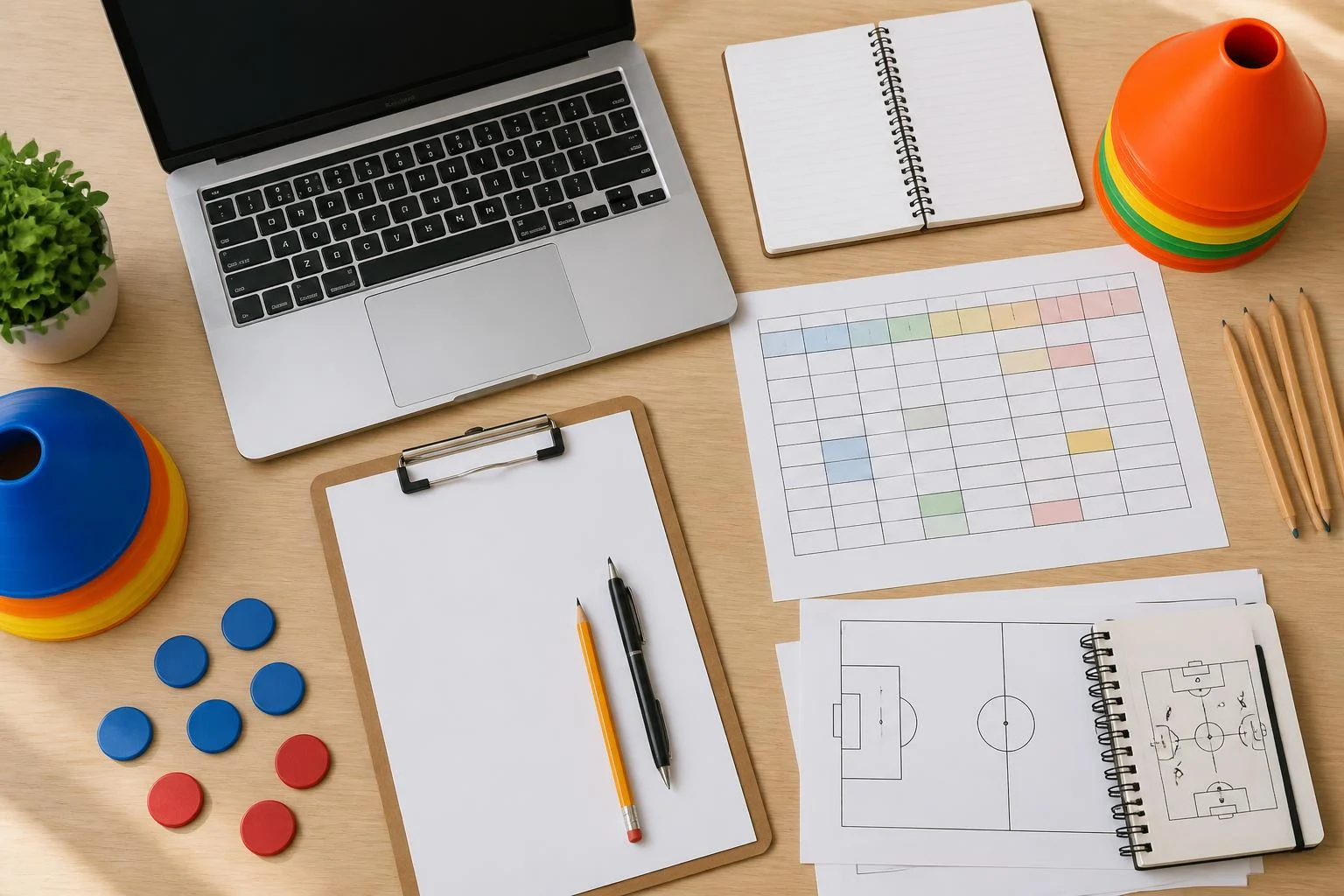
A round-robin tournament is an all-play-all format: every team or player meets every other participant in the same group. Choose it when equal participation and comparable standings matter more than finishing quickly. In a single round robin, each pairing happens once; in a double round robin, each pairing happens twice. Source (accessed 2026-10-20)
Decide whether round robin fits your event
Round robin is usually the better structure for a small pool, a school activity, a club league, or a social event where people expect more than one chance to play. Because every participant faces the same set of opponents, the standings can compare like with like. A single-elimination bracket, by contrast, removes participants after a loss and is generally more practical when time, space, or staffing is limited.
A bracket-style display can still be useful for showing the order of round-robin matches. It does not turn the event into elimination: the underlying rule remains that every scheduled pairing is played.
| Choose this format | When it works well | Trade-off |
|---|---|---|
| Single round robin | Each pairing is played once; useful when time is limited but equal opponents still matter. | A single result can have a larger effect on the table. |
| Double round robin | Each pairing is played twice; useful when you want a return meeting or home-and-away balance. | The schedule contains twice as many matches as a single round robin. |
| Single elimination | Useful when you need a winner quickly from a larger field. | Participants may have only one match. |
The distinction between single and double round robin is the number of times participants meet; a double round robin has every team play every other team twice. Source (accessed 2026-10-20)
Calculate matches and rounds before you invite people
For n participants, a single round robin has n(n-1)/2 total matches. A double round robin has n(n-1) total matches. Match count is not the same as round count: several matches can run at the same time when you have enough courts, fields, tables, or stations. The all-play-all basis of the format is that every contestant meets every other participant. Source (accessed 2026-10-20)
With an even number of participants, a single round robin needs one fewer rounds than the number of participants. With an odd number, it needs the same number of rounds as participants, because one participant receives a bye in each round. Treat the bye as a scheduled rest period, not as an unplanned gap.
| Pool | Single round-robin matches | Rounds needed | What to plan |
|---|---|---|---|
| 3 teams | 3 | 3 | One team has a bye in every round. |
| 4 teams | 6 | 3 | Two matches can run at once if two playing areas are available. |
For 3 participants, the single-round-robin formula gives 3 matches; for 4 participants, it gives 6 matches. An odd-sized round robin uses a bye each round so that the rotation can continue fairly. Source (accessed 2026-10-20)
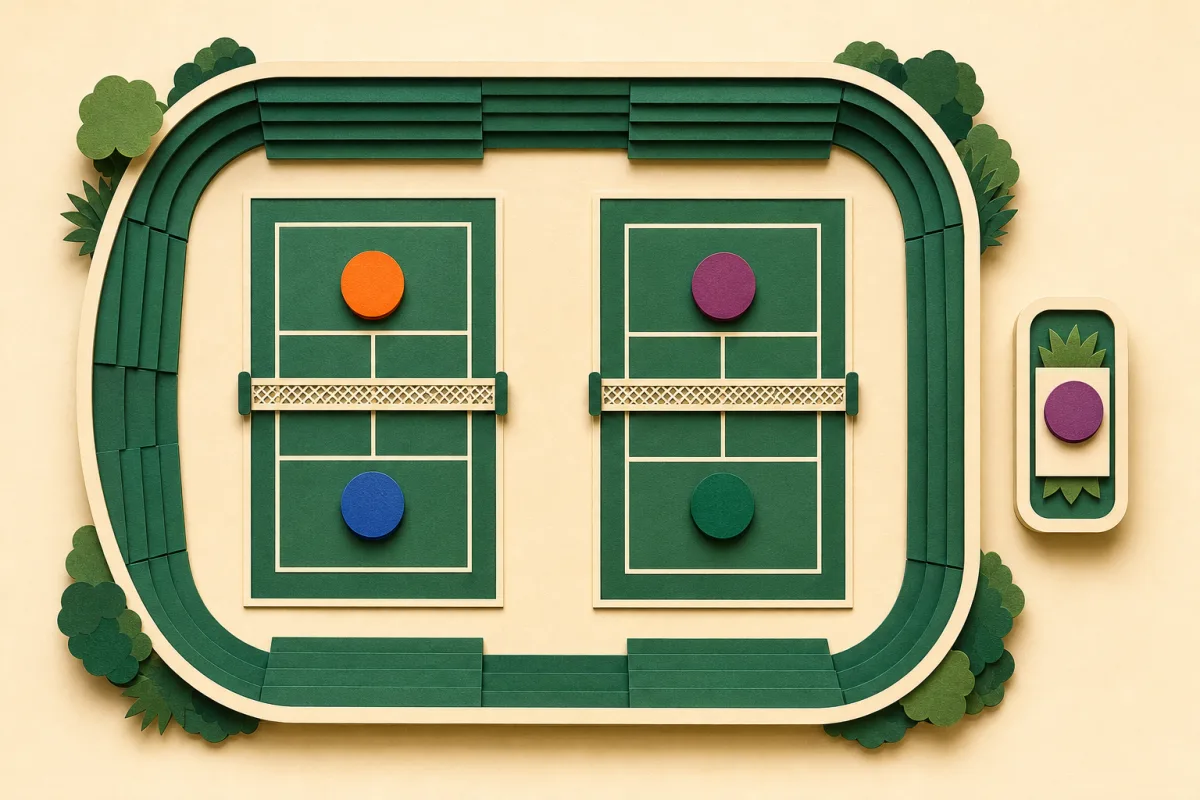
Use these schedules as working examples
A 3-team round robin
| Round | Match | Bye |
|---|---|---|
| One | North vs South | West |
| Two | North vs West | South |
| Three | South vs West | North |
This layout gives every team two matches and one bye. If you have one court or field, use separate time slots within each round; if you have enough space, the concept of a round still helps you keep rest and score reporting organized.
A 4-team round robin
| Round | Playing area A | Playing area B |
|---|---|---|
| One | North vs South | East vs West |
| Two | North vs East | South vs West |
| Three | North vs West | South vs East |
The schedule contains each of the 6 unique pairings once. Running both matches in a round at the same time reduces the event to 3 rounds; with one playing area, keep the same pairings but place them in consecutive slots. Source (accessed 2026-10-20)
Make a schedule manually with the circle method
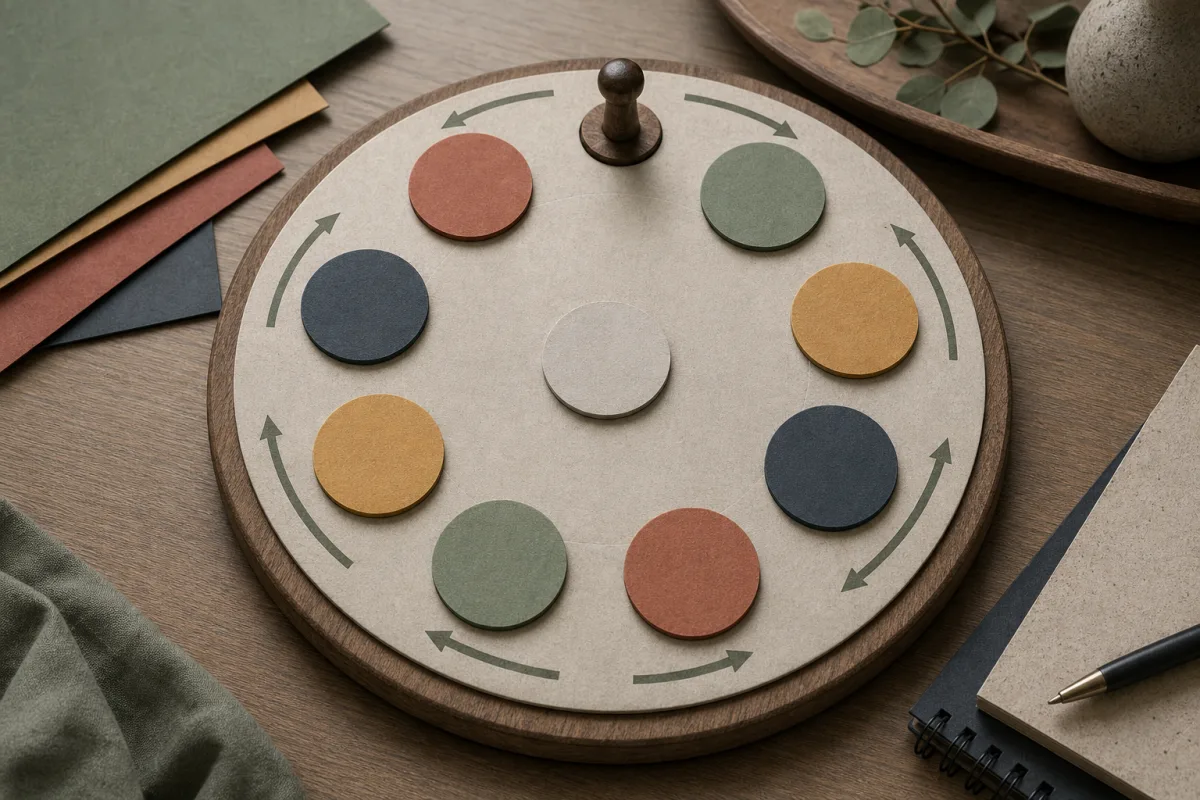
The circle method is a practical way to create an all-play-all schedule without accidentally repeating a pairing. For an odd-sized group, add one placeholder named BYE. Put participants around a circle, pair opponents across from each other, then keep one position fixed while rotating the others before the next round. Any participant paired with BYE rests that round.
- Write names exactly as they should appear on the schedule and standings.
- Add the BYE placeholder only when the participant count is odd.
- Create every round before assigning times, courts, or fields.
- Check that each pair appears once in a single round robin and that every participant has the same number of scheduled matches.
- Assign locations and slots while protecting reasonable recovery time between matches.
- For home-and-away competition, reverse the listed home side in the return meeting and use the double-round-robin match total.
Do a final pairing audit before publication. Duplicate pairings, a forgotten bye, and a team booked in overlapping slots are easier to fix before anyone arrives than during a live event.
Set standings and tie-breaks before the first result
A match list tells people where to go; standings tell them where they stand. At a minimum, a shareable table should include participant name, matches played, wins, losses, and competition points. Add draws, scores for, scores against, or score difference only when those fields are part of your published rules.
Publish the scoring rule and tie-break order before play begins. A sensible order might use head-to-head result, then score difference, then scores for, followed by a playoff or drawing procedure if your event rules permit it. The important operational rule is consistency: do not introduce a new tie-break after teams are level.
A copyable schedule and results template
| Round | Time | Location | Home / player | Away / player | Result | Verified by |
|---|---|---|---|---|---|---|
| — | — | — | — | — | — | — |
| — | — | — | — | — | — | — |
| — | — | — | — | — | — | — |
A printable sheet works well for a small in-person event. A spreadsheet can suit organizers who want to sort or calculate manually. A scheduling app may be a better fit when updates need to be shared while results are being entered. Whatever format you choose, include the event name, date, venue or room, match times, locations, scoring rules, tie-break order, and a contact point for corrections.
What to compare in a round-robin generator
Choose a tool based on your event’s actual constraints rather than its label. Confirm that it handles your participant count and the format you need, then check how it treats byes, score entry, standings, tie-breaks, schedule sharing, and any export or print workflow you rely on. If you need elimination after pool play, also check whether the next stage can be prepared separately.
- Format control: Can you choose single or double round robin?
- Schedule control: Can you review pairings before publishing and assign locations or time slots?
- Results workflow: Is it clear who enters a score and how a result is confirmed?
- Standings rules: Can the displayed table match your scoring and tie-break policy?
- Sharing: Can participants access the current schedule in the way your group needs?
For a separate look at elimination-oriented planning, try the Free Tournament Bracket Generator. If you are weighing different setup tools, see Best Free Bracket Builder: What to Compare Before You Choose. More planning articles are available in Brakora Guides.
Use Brakora only after checking the fit
Brakora is presented as a tournament bracket maker in its App Store listing. Review the listing and your required workflow before relying on any tool for a live round-robin event, particularly if you need specific standings, sharing, or export behavior. Source (accessed 2026-10-20)
You can also return to the Brakora tournament bracket maker to explore the product context.
How many games are played in a round-robin tournament?
For n participants in a single round robin, use n(n-1)/2. Double the result for a double round robin, which is n(n-1). Source (accessed 2026-10-20)
How should byes be assigned fairly?
For an odd-sized group, add a BYE placeholder to the rotation. Each participant is paired with it once, so each receives one scheduled rest round.
Can a round-robin schedule be shown as a bracket?
Yes, as a visual schedule. Keep the rounds, pairings, results, and live standings clear, but do not describe it as elimination unless teams actually leave the competition after a loss.